Klevoh Case Study

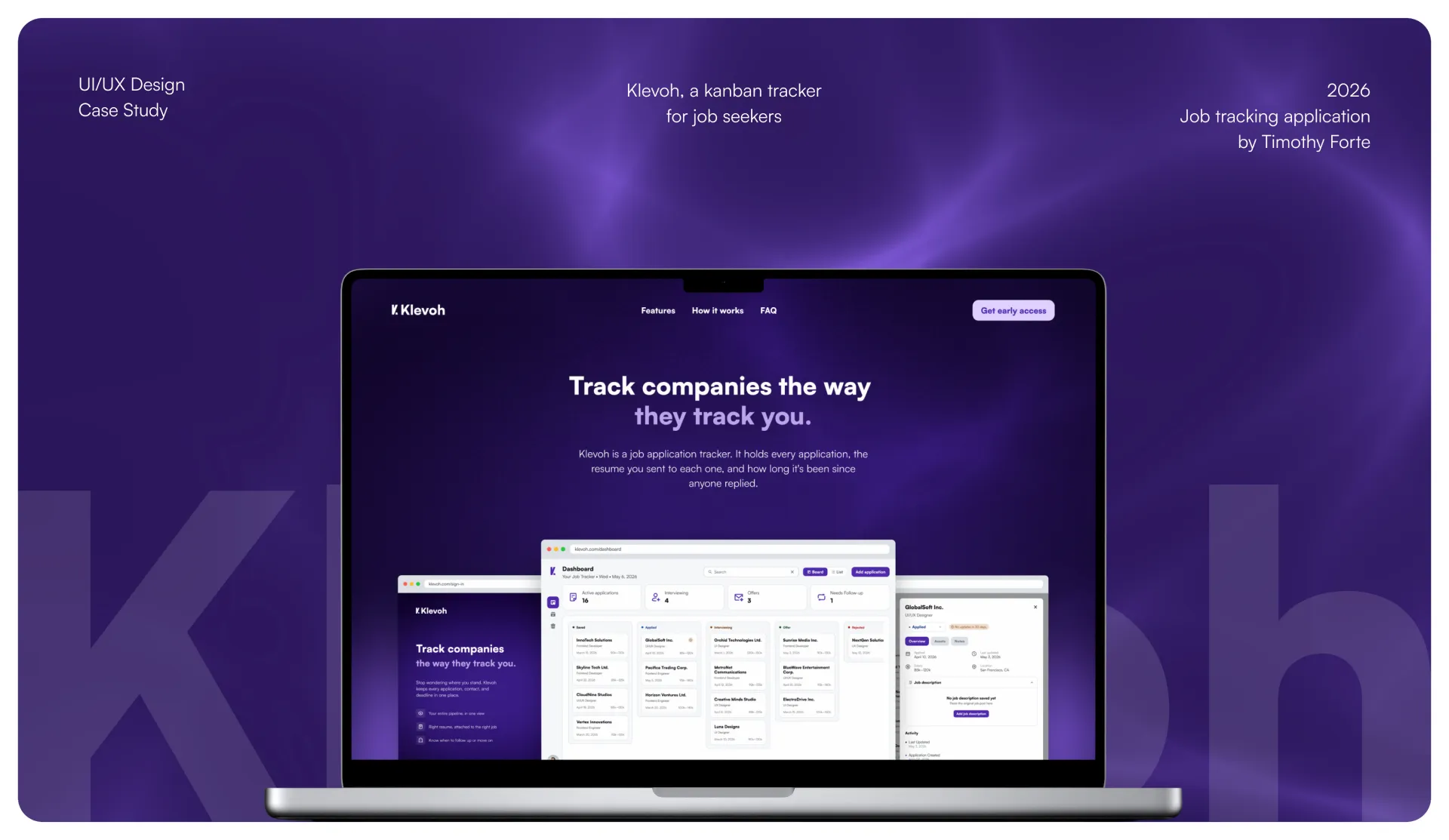
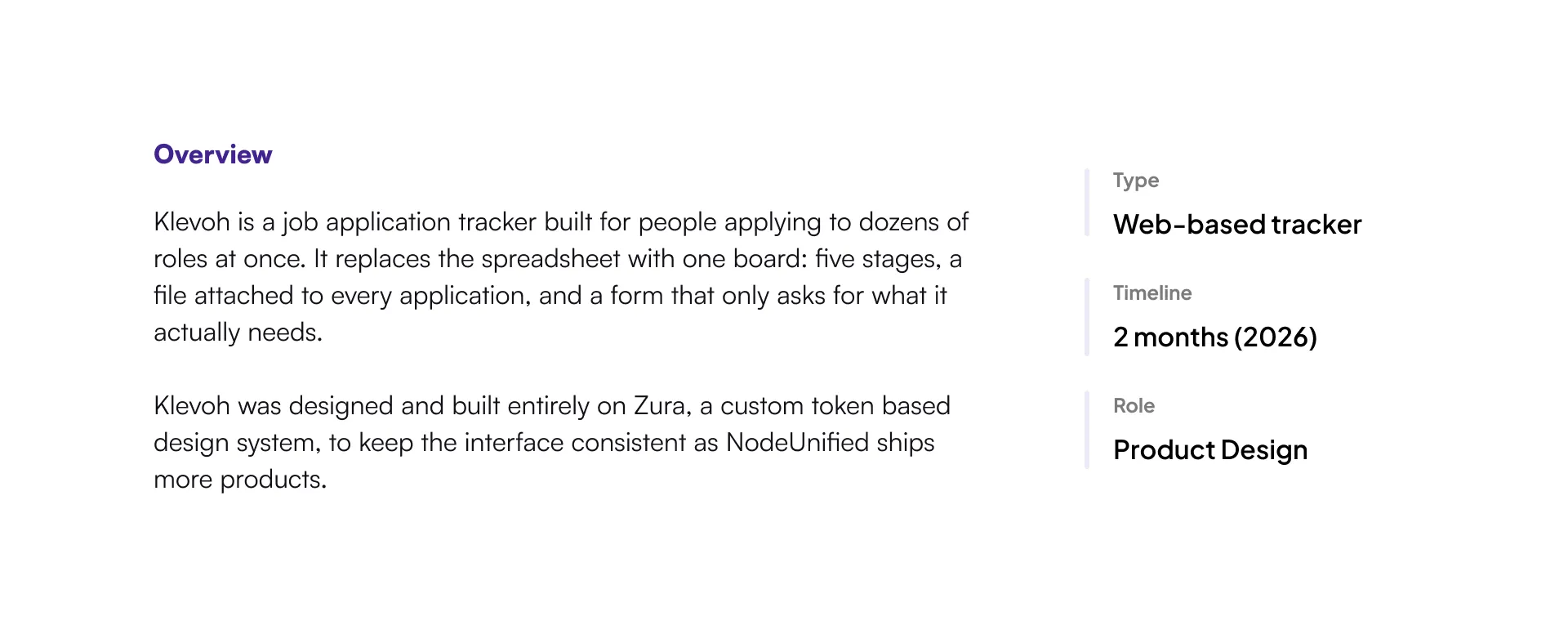
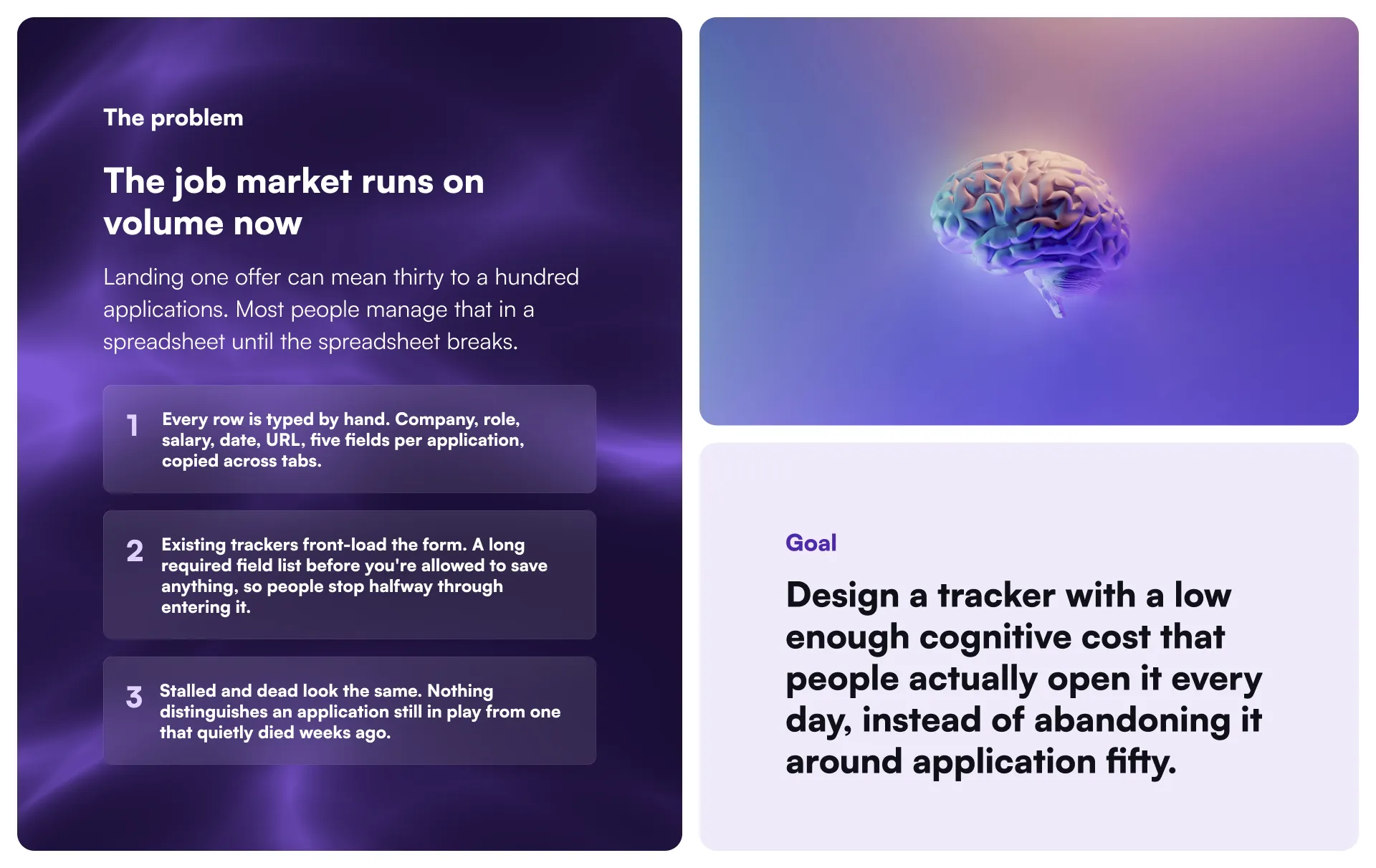
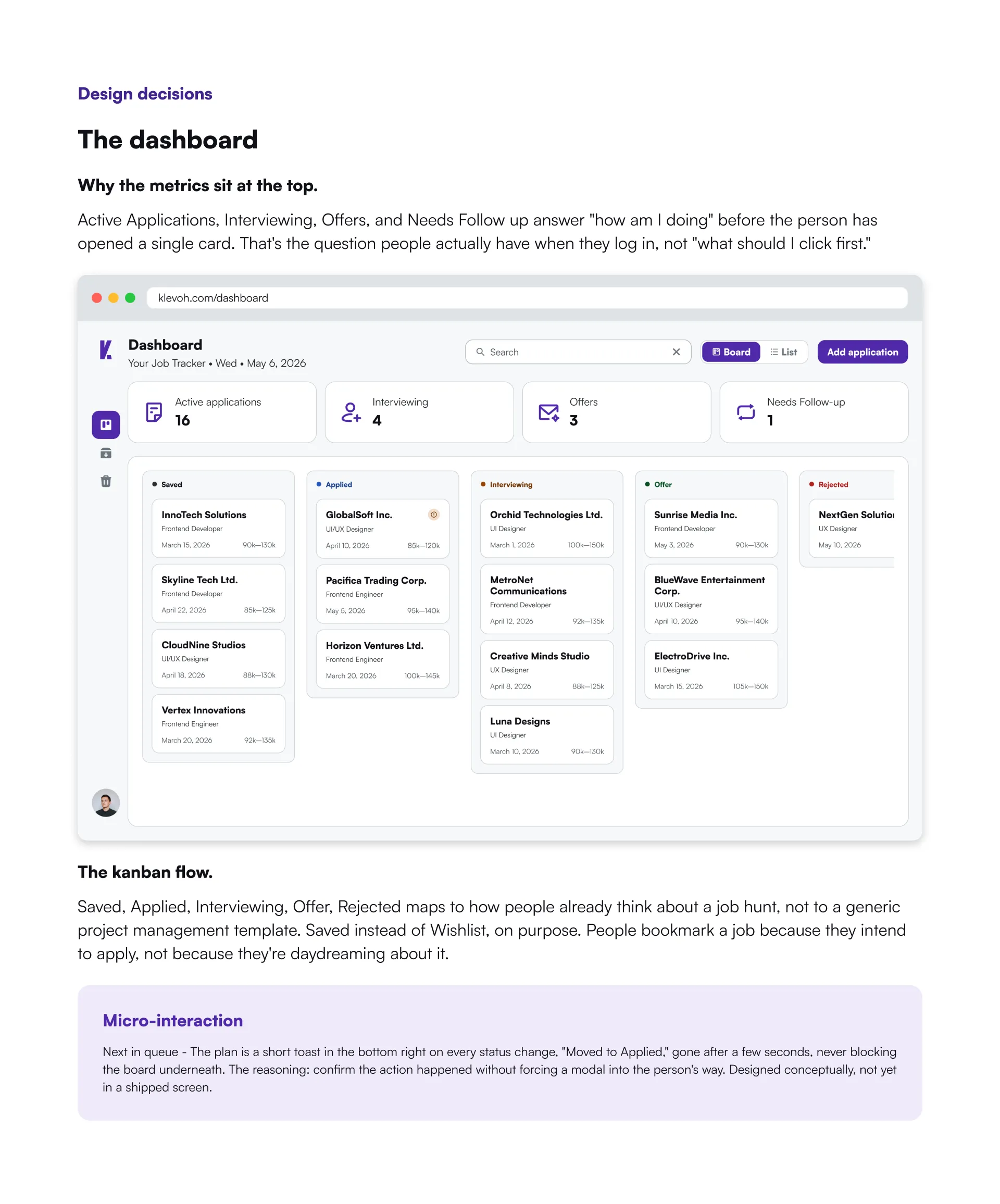
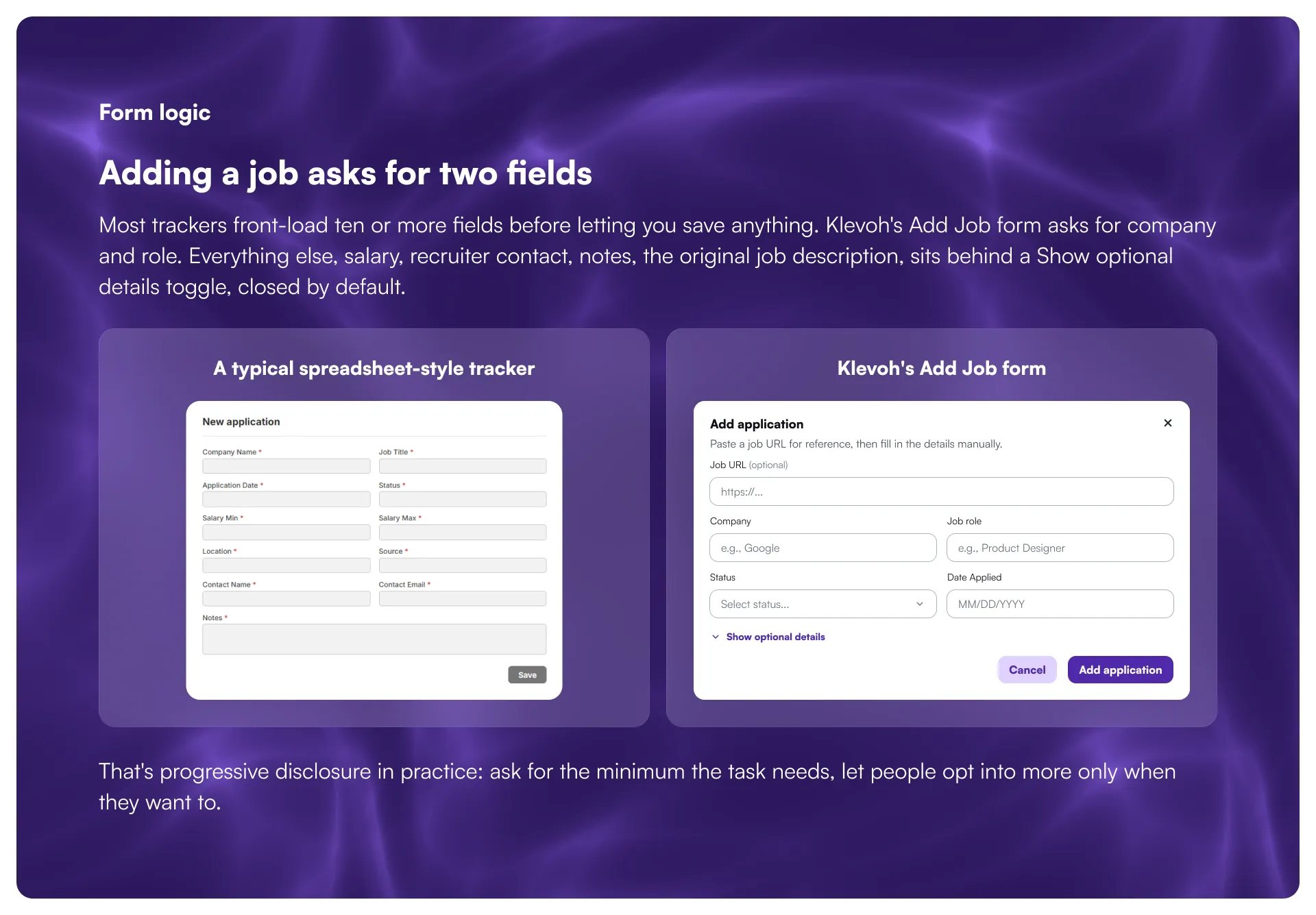
Klevoh: UI/UX case study by Timothy Forte, a job application tracker for job seekers applying to dozens of roles at once.Overview: Klevoh replaces the spreadsheet with one board — five stages, a file attached to every application, and a form that only asks for what it actually needs — designed and built on Zura, a custom token-based design system. Type: Web-based tracker. Timeline: 2 months (2026). Role: Product Design.Problem & Goals: the pain points job seekers face when the market runs on volume, alongside the goal — design a tracker with a low enough cognitive cost that people actually open it every day.Design decisions: why the metrics — Active Applications, Interviewing, Offers, Needs Follow-up — sit at the top of the dashboard, shown alongside the Klevoh dashboard screen, followed by the Saved/Applied/Interviewing/Offer/Rejected kanban flow.Form Logic: the Add Job form asks for company and role first, with everything else behind a 'Show optional details' toggle, shown next to the form screenshot and a micro-interaction note about confirming status changes without blocking the board.Engineering & deployment: the landing page shipped first, on purpose — klevoh.com live on Vercel while the full tracker finishes design, with the handoff running through a token layer rather than a static spec doc.Where it stands: the landing page is live collecting early access signups, while the full product across auth, onboarding, the board, and the job card is fully designed and in active development.Closing credit: Klevoh case study by Timothy Forte.